Reimagining the group savings circle
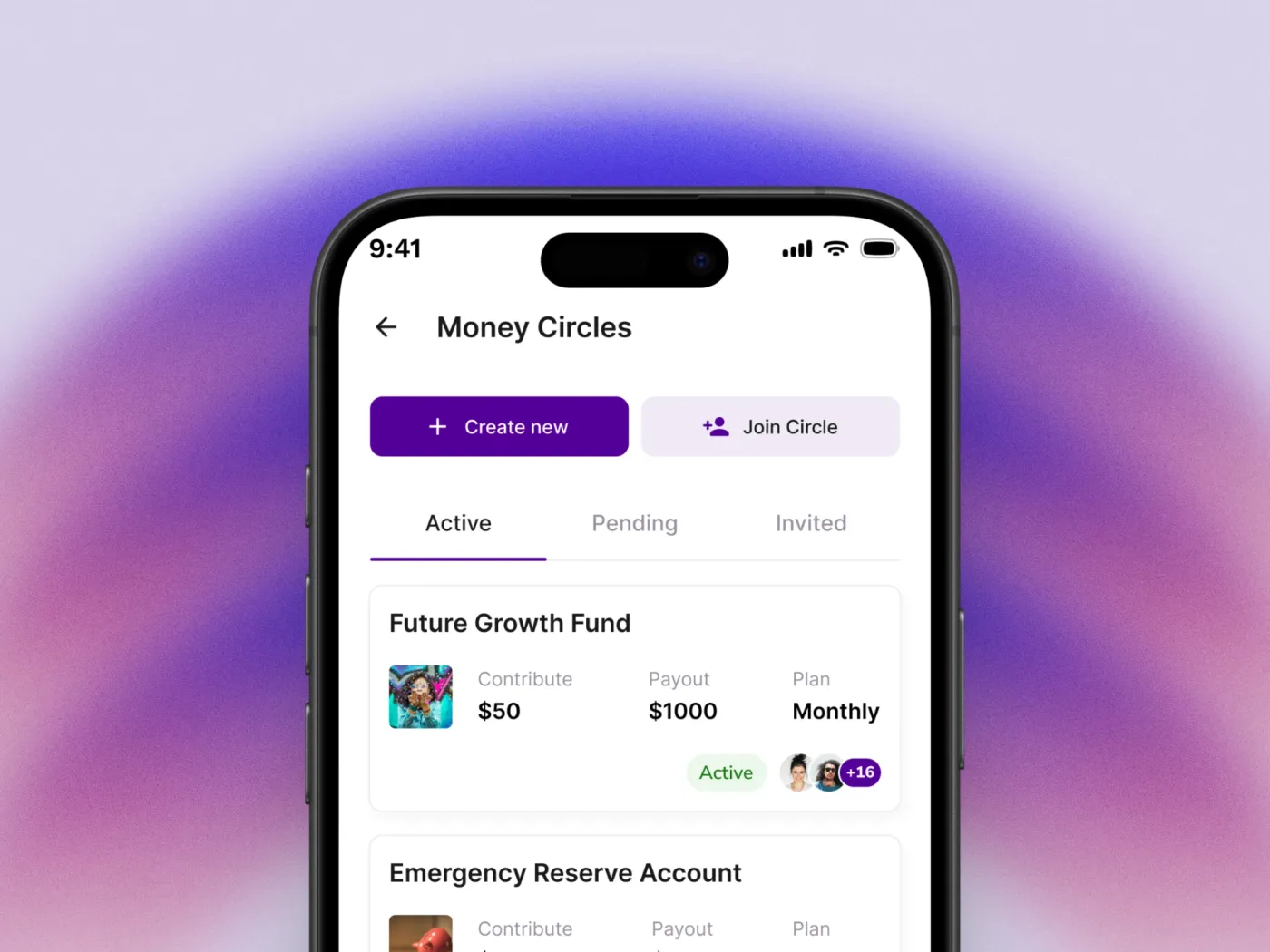
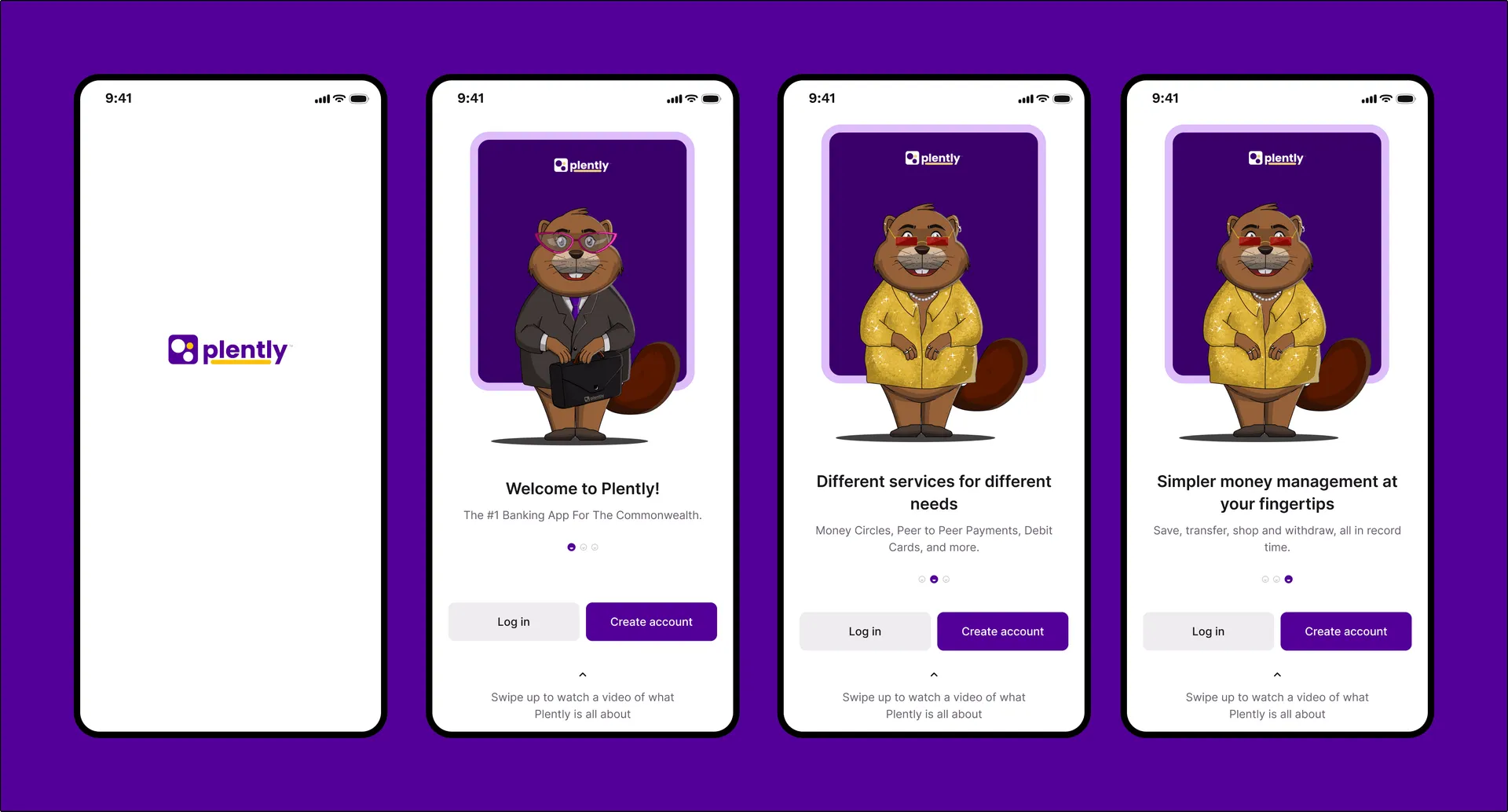
Plently is a fintech app reimagining group finance. It brings traditional money circles into the digital age through collaborative group savings and peer-to-peer payments. The goal was to build a modern, secure platform founded on shared financial trust.
I co-designed this product experience alongside another designer, shaping the mobile ecosystem and the responsive marketing website to drive user growth.
The circle worked, until it didn’t
Many people need quick access to funds to handle life’s essentials, yet traditional credit systems can feel restrictive, complex or out of reach.
Informal group savings, or “money circles”, have long provided a simple, trusted way for communities to support each other financially.
The challenge lies in their limited reach and the risks of mismanagement, fraud and inconsistency. This created the need to digitise the practice safely.
Mapping fintech patterns to automate trust
Having grown up participating in traditional savings circles, I understood their unique psychological trust patterns. This background gave me a deeper understanding of the behavioural dynamics that shaped some of our design decisions.
We analysed notable financial and community-based platforms to understand their strengths, patterns and UX models. These included Ajo Money, to see how it handled savings circles, and PiggyVest and OPay, to evaluate how they handled digitised rotation cycles, reward systems and unified wallet architectures.
We also studied global leaders like Revolut and Wise to understand best-in-class onboarding, virtual card management and security infrastructure.
Our strategy was to automate user commitment and remove rigid payment barriers, while ensuring users could safely pool savings, transfer funds peer-to-peer instantly and spend flexibly.
01 — Saving together, simplified
We designed the core savings loop around accountability.
Users can join an existing group or create a new one and invite members via link or group ID. To prevent missed offline payments, we introduced an optional autosave feature that handles periodic contributions automatically, and a reminder feature that lets admins notify members who haven’t completed their payments for the current cycle.
Traditional circles force users to wait strictly for their rotation turn. To solve that, we created an Advance Withdrawal feature, allowing qualified members to request early payouts for a small interest fee.
02 — Unified wallet to centralise money streams
Tracking money circle payouts and peer-to-peer transfers in separate sections could create a high cognitive load for users, so we built a consolidated wallet for clarity.
Payouts from money circles are automatically paid into this wallet, and the wallet can also be funded through P2P transfers.
The P2P feature allows users to send and receive money instantly within the Plently ecosystem via username or synced phone contacts, and to save frequent recipients as beneficiaries.
03 — Debit cards for flexibility
Relying solely on standard bank transfers would restrict real-world spending. We needed to extend Plently’s utility into everyday physical transactions, so we introduced debit cards.
Users can instantly generate virtual cards or order tracked physical cards. Both types are secured with instant card freeze controls.
What this taught me
This project proved the value of deep collaborative design. Working alongside another designer taught me how to defend my UX ideas constructively while keeping the overall design system cohesive. I learned that designing for finance requires extreme transparency, where every clear label and security toggle directly builds the trust users need to manage money together.